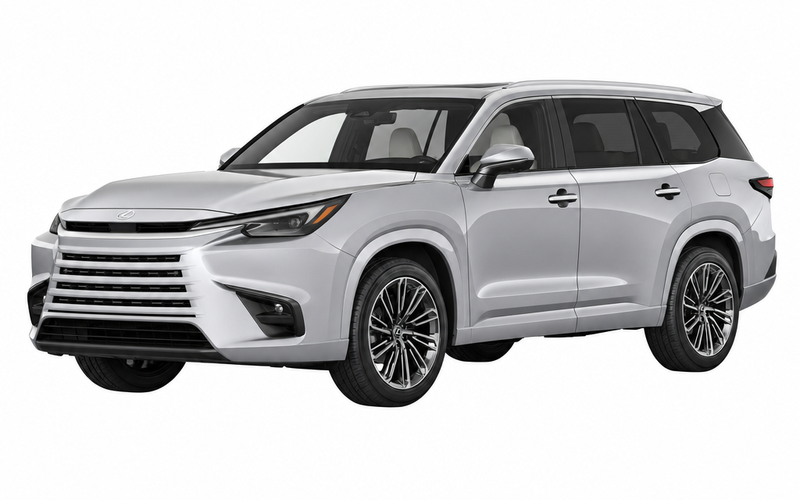
Lexus TX: A Three-Row Luxury SUV Built Specifically for North America
The 2024 Lexus TX is the first model to carry the TX nameplate, and unlike many Lexus SUVs, it was engineered from the ground up for the North American market rather than adapted from a global platform. It competes directly with the Acura MDX, the BMW X7, and the Mercedes-Benz GLS in the premium three-row family segment, with a focus on cargo flexibility, a quiet cabin, and unusual powertrain variety. Its 97 cubic feet of total cargo capacity places it ahead of several rivals for family hauling duty. https://pressroom.lexus.com/style-utility-and-comfort-the-2026-lexus-tx/
Because the TX shares the GA-K platform with the related Toyota Grand Highlander, it benefits from proven structural engineering at a more accessible price point than German or domestic luxury competitors, while retaining Lexus-grade interior materials and a 14-inch multimedia touchscreen with Lexus Interface. https://global.toyota/en/newsroom/lexus/39292258.html
Why Consider the Lexus TX
The TX stands out in the three-row segment for its powertrain variety and cargo planning. Buyers can choose a conventional turbocharged four-cylinder, a turbo hybrid, or a plug-in hybrid — a breadth of choice the Acura MDX, which is gasoline-only, cannot match.
- 20.2 cubic feet of cargo space behind the third row with all seats up, expanding to 57.4 cubic feet with the power-folding third row down and 97 cubic feet with both rear rows folded
- 5,000-pound towing capacity across all three powertrain options
- Standard all-wheel drive on every TX model
- 21-speaker Mark Levinson Premium Surround Sound and a 14-inch multimedia touchscreen
Details such as the Power Rear Door with Kick Sensor and power-folding split third-row seat address real-world loading scenarios more directly than most European rivals. https://discoverlexus.com/models/tx
Specifications and Powertrains
TX350 — 2.4-liter turbocharged inline four-cylinder. Produces 275 horsepower through an eight-speed automatic transmission. This is the entry powertrain, suited to buyers who want straightforward, conventional power delivery without electrification.
TX500h — 2.4-liter turbocharged hybrid. Available in F SPORT Performance grade with Adaptive Variable Suspension, unique 22-inch alloy wheels, and a combined net output of 366 horsepower with 409 lb-ft of torque. This is the sport-oriented choice.
TX550h+ — 3.5-liter V6 plug-in hybrid. A Lexus first, this PHEV pairs a V6 with DIRECT4 all-wheel drive and a high-density lithium-ion battery for a manufacturer-estimated 33 miles of pure-electric driving; net combined output is 404 horsepower. The 2026 model year carries these same three powertrains with minor changes. https://pressroom.lexus.com/style-utility-and-comfort-the-2026-lexus-tx/
Payment Reality
Monthly payments for a Lexus TX depend heavily on which of the three trims you select — the TX350, TX500h, and TX550h+ occupy progressively higher price points — plus your down payment, loan term, and residual value. Three-row luxury SUVs generally depreciate fastest in the first three years, so a shorter term or larger down payment reduces the risk of negative equity versus a lease or long loan. Use the CarPayCheck calculator with the current MSRP and your local sales tax to get a realistic figure rather than a teaser rate.
Warranty and Maintenance
Lexus covers the TX with a standard basic warranty of 4 years or 50,000 miles, with hybrid-related components such as the battery pack and powertrain electronics covered for 8 years or 100,000 miles in most states. Scheduled maintenance follows the recommended 6-month or 5,000-mile service intervals, beginning with inspections and oil changes; brake pads and tires are wear items and are not covered. Parts availability is strong nationwide thanks to the shared platform with the Toyota Grand Highlander, and independent shops can handle conventional service, while hybrid powertrain work is typically reserved for dealer-certified technicians.
Who the Lexus TX Suits
The TX fits families and road-trip households that carry significant cargo — sports gear, strollers, or luggage — and want the flexibility of three powertrain types in a single model. It suits buyers who compare the Acura MDX, the BMW X7, or the Mercedes-Benz GLS and prioritize second- and third-row comfort and storage over badge prestige. If fuel economy is the top priority, a lower-cost hybrid alternative such as the Toyota Grand Highlander Hybrid may make more financial sense; if performance is the focus, the TX500h F SPORT delivers without leaving the Lexus family. https://global.toyota/en/newsroom/lexus/39292258.html